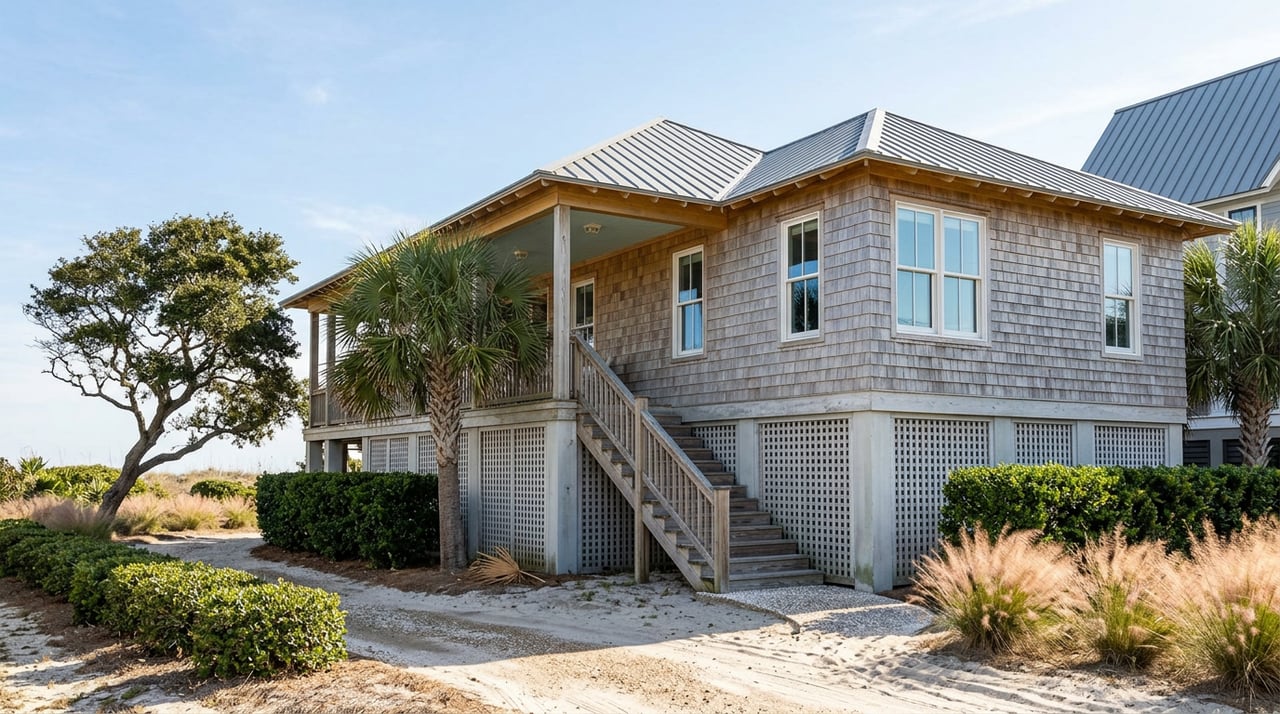
Say you find the listing. Three bedrooms, two blocks off the beach, a rental calendar in the photos showing steady summer bookings and a projected income number in the listing notes. You assume that income is part of what you're buying. On Tybee Island, it isn't.
Tybee City Council just voted on August 27, 2026 to amend its short-term vacation rental ordinance again, dividing the island into sectors with different caps and adding a requirement that every rental designate an emergency contact or face a fine. The new rules take effect January 1, 2027. If you're watching Tybee for an investment property or a home you might rent occasionally, that vote is the headline. It is not the part of the ordinance that will actually decide your closing.
The rule that decides your closing has been on the books since 2024, and this month's vote didn't touch it: a Tybee short-term rental certificate does not transfer when the property changes hands. Buy a cottage with an active permit and a strong booking history, and the permit stays with the seller's name, not the deed. What you inherit is a house. What you don't automatically inherit is the right to rent it out.
What Just Passed, and What It Actually Does
The August 27 vote split the island into sectors and set different rental caps for each one, with the areas around Butler Avenue treated differently on either side depending on proximity to the commercial district. Council also added a requirement that every short-term rental post an emergency contact who can respond immediately, backed by a fine for noncompliance. Mayor Brian West has said the number one complaint about short-term rentals is noise and unruly behavior, not the rentals themselves, and the new enforcement language is aimed at that.
None of that goes into effect immediately. The new rules take effect January 1, 2027, which city leaders framed as time for owners and management companies to get compliant before enforcement starts.
The precise cap percentages in the final adopted sectors haven't been detailed in the reporting on the vote itself. Earlier in the year, the council was weighing a version that would have allowed up to 60 percent of eligible residential units in the eastern and southern zones near the beach and commercial district to operate as rentals, with a 30 percent cap on eligible units in the quieter western and northern residential areas. City officials were careful to clarify that those figures are caps on eligible residential units in a zone, not a share of every home on the island. Whether those exact numbers survived to the final text isn't confirmed in what's been reported since the vote, so anyone underwriting a specific parcel should confirm the sector and its cap directly with the city's planning office rather than working from the spring proposal.
The Ruling That Cleared the Way
Council's confidence to act this month traces back roughly three weeks earlier. Tybee's authority to regulate short-term rentals in residential zones had been tied up in court since January 2023, when a group called Tybee Alliance sued, arguing the city's rules amounted to registering and inspecting residential rental property, something they say Georgia law bars local governments from doing without cause. Chatham County Judge Christopher Middleton heard oral arguments in that case in January 2026. In early August, ahead of the council's August 27 vote, a judge sided with the city on its authority to regulate rentals in those areas.
That sequence matters more than either fact alone. A lawsuit challenging the city's power to regulate got resolved, and three weeks later the council used that regulatory footing to pass a broader rewrite. If you're evaluating a Tybee rental property today, you're looking at a regulatory environment that just had its legal foundation confirmed, not one still waiting on a ruling that could unwind the rules.
The Part From 2024 That's Still Running the Table
Zoom out further and the timeline explains why the certificate itself matters more than this month's vote. Tybee has regulated short-term rentals since 2016. In October 2022, the city froze new rental permits across its R-1, R-1-B, and R-2 residential zones, which together make up the large majority of the island's housing stock. In June 2024, council went further and eliminated the ability to transfer an existing certificate when a property changes hands through sale, death, or marriage.
That's the rule a buyer needs to internalize. If a Tybee cottage has an active short-term rental certificate today, that certificate is tied to the current owner and the current use, not the address. A buyer closing on that home cannot simply keep renting it out under the seller's certificate. In the frozen residential zones, a new owner generally cannot obtain a new certificate either, since the city isn't issuing them there. The rental income in the listing photos belongs to a business the seller has been running, not an asset that conveys at closing.
Kerry Friedman Rosen, a full-time Tybee resident since 2010, said a street near her home is now roughly half short-term vacation rentals with few full-time neighbors left. Her view, shared during the spring debate over loosening the rules, was blunt: she worried that changing course would undo years of task forces, committee meetings, and public forums that had already settled on what she considered a fair compromise.
That tension, between residents who've watched their block turn over and owners who bought expecting rental income to travel with the property, is exactly why the non-transferability rule exists and exactly why it isn't going anywhere in the current ordinance.
Here's the practical shape of it:
| When | What Happened | What It Means Today |
|---|---|---|
| 2016 | City adopts its first short-term rental ordinance | Rentals under 30 days require a permit |
| October 2022 | New permits frozen in R-1, R-1-B, R-2 zones | Most of the island's residential housing can no longer add new rental permits |
| June 13, 2024 | Certificates made non-transferable on sale | A buyer does not inherit a seller's rental permit |
| January 2026 | Judge hears arguments in Tybee Alliance's suit | City's authority to regulate residential rentals is challenged in court |
| Early August 2026 | Judge rules in the city's favor | Clears the legal path for further council action |
| August 27, 2026 | Council passes sector caps, emergency-contact rule | Adds structure on top of the existing freeze and non-transfer rule |
| January 1, 2027 | New rules take effect | Compliance window closes for owners and managers |
What This Means If You're Buying or Selling
If you're the seller of a home with an active rental certificate, the certificate is part of your business, not part of the sale. Marketing a strong rental income history is fair, but it's worth being precise with buyers about what does and doesn't transfer, since the certificate itself won't.
If you're the buyer, a few questions belong on your due diligence list before you write an offer:
- Confirm the parcel's zoning directly with the city. Homes in R-1, R-1-B, and R-2 sit inside the residential freeze; commercial-zoned parcels are treated differently.
- Ask whether the current certificate is active and in continuous use. Grandfathered permits generally require documented rental activity to stay valid, so a home that's sat vacant for a stretch may have already lost its status before you ever see the listing.
- Get written confirmation, not a verbal assurance, that any permit does not transfer to you under the 2024 rule. Don't underwrite a purchase price around rental income you can't legally generate.
- Ask which sector the property falls into under the new caps and what that sector's rules require once the ordinance takes effect January 1, 2027.
- If you're buying purely as a residence with no plan to rent, none of this changes your closing. It matters only if income is part of your math.
If you're renewing an existing certificate, note that the city's standard renewal window runs January 1 through March 31 each year, and the 2026 deadline was extended to May 31. That's a separate administrative date from the ordinance's effective date and worth tracking on its own calendar.
Frequently Asked Questions
If I buy a Tybee home with an active rental certificate, do I get to keep renting it? Not automatically. Under the rule adopted in 2024, the certificate does not transfer with the sale. You would need your own valid certificate, which the city generally will not issue in the frozen residential zones.
Does the August 2026 ordinance change the non-transfer rule? Based on what's been reported since the vote, no. The amendments add sector caps and an emergency-contact requirement. They don't appear to restore transferability.
When do the new sector rules take effect? January 1, 2027, which the city has said gives owners and management companies time to come into compliance.
Where do I check a specific address's zone and permit status? Directly with the City of Tybee Island's planning and short-term rental office before you rely on anything in a listing.
Tybee's rental rules have changed repeatedly since 2016, and they'll likely change again. What hasn't changed since 2024 is the line between the house and the business running inside it. Know which one you're actually buying before you sign.
If you're weighing a Tybee property, whether it's a full-time home, a family retreat, or a place you'd consider renting, The Landings Home Team can walk you through what a specific parcel's zoning and permit history actually mean before you write an offer. Let's start a conversation.