A five bedroom home built in 2020 on Turner's Creek is currently marketed with a caveat buyers should read closely: the listing describes "possible dock access to deep water with DNR approval," not a finished, ready to use dock. That phrasing isn't a builder hedging on quality control. It reflects something true about every waterfront property on this island right now. According to Georgia DNR, the state has not finished writing the rules that govern private residential docks and has been operating without a finished rule since 2022.
For a buyer comparing marsh front cottages against newer construction along Turner Creek, Betz Creek, and Bull River, that gap matters more than square footage. The word "dock" on a listing sheet can mean a fully licensed structure, a decades old pier nobody has ever formally documented, or a promise contingent on a state agency that is still deciding what it will and won't approve.
Why the Question Doesn't Have a Fixed Answer Yet
For decades, private docks in coastal Georgia moved through a joint process between the Army Corps of Engineers and the state, under a standing federal permit that set the size limits and review steps everyone used. The Corps let that permit expire in 2022 and didn't renew it. Since then, Georgia's Department of Natural Resources has issued dock approvals under an interim standard operating procedure that borrows from the old federal standards, but there has been no formally adopted state rule underneath it.
DNR has spent the years since trying to write one.
| When | What happened |
|---|---|
| 2022 | The Corps' joint permit expired. DNR began licensing private docks under an interim procedure with no published rule behind it. |
| January 2024 | DNR opened formal rulemaking with a draft that largely mirrored the old federal limits, a 1,000 foot walkway cap and 3,000 square foot maximum structure. |
| 2025 | A DNR stakeholder committee reviewed the draft. The group reached consensus on modest changes and recommended that science guide any move toward longer docks. A minority report argued for larger docks. A public town hall followed that September. |
| June 2026 | DNR released a new draft allowing 1,000 foot walkways at six feet wide with no square footage maximum, looser than what the stakeholder committee had recommended. |
| August 2026 | DNR briefed the Board of Natural Resources on the rule's status. No final rule has been adopted. |
Four years in, anyone closing on a Wilmington Island waterfront home this fall is buying under the interim procedure, not a finished regulation, and whatever standard eventually gets adopted will shape how future modifications, rebuilds, and new construction get reviewed.
What "Dock" Means on a Deed
Private residential docks in Georgia are handled differently from marinas and community docks. A marina or shared community dock has to go through the Coastal Marshlands Protection Act process, reviewed by the Georgia DNR's five-member Coastal Marshlands Protection Act Committee. A single family private dock is specifically exempted from that process. Instead, it gets a Revocable License from DNR staff, a lighter weight approval that can be pulled if the structure falls out of compliance.
That lighter process is also where the ambiguity lives. DNR's own guidance is direct about older structures: if a dock was built before the office started issuing permits, the owner has to obtain a new permit to establish compliance, regardless of how long the structure has stood. A pier that has quietly served a family since the 1960s doesn't get grandfathered in by age alone. It gets evaluated the way a brand new proposal would.
That means the file a seller hands over at closing matters as much as the dock itself.
Where This Comes Up Most on the Island
Wilmington Island's water access runs through a handful of named creeks and rivers, and each has its own mix of old and new. Betz Creek and Turner Creek carry some of the newer subdivisions, where recent construction sits alongside older ranch homes from the island's mid century development. Bull River frontage tends toward larger, more exposed lots with long range views toward the Savannah River shipping channel.
That range is exactly why a single conversation about "the dock" doesn't cover every property the same way. A newer home advertised with contingent DNR approval is asking a buyer to trust a future outcome, while an older property with an undocumented dock raises a different question: whether the structure matches what DNR would currently approve. Both situations are worth understanding before an offer goes in, not after.
Community Docks Offer a Different Arrangement
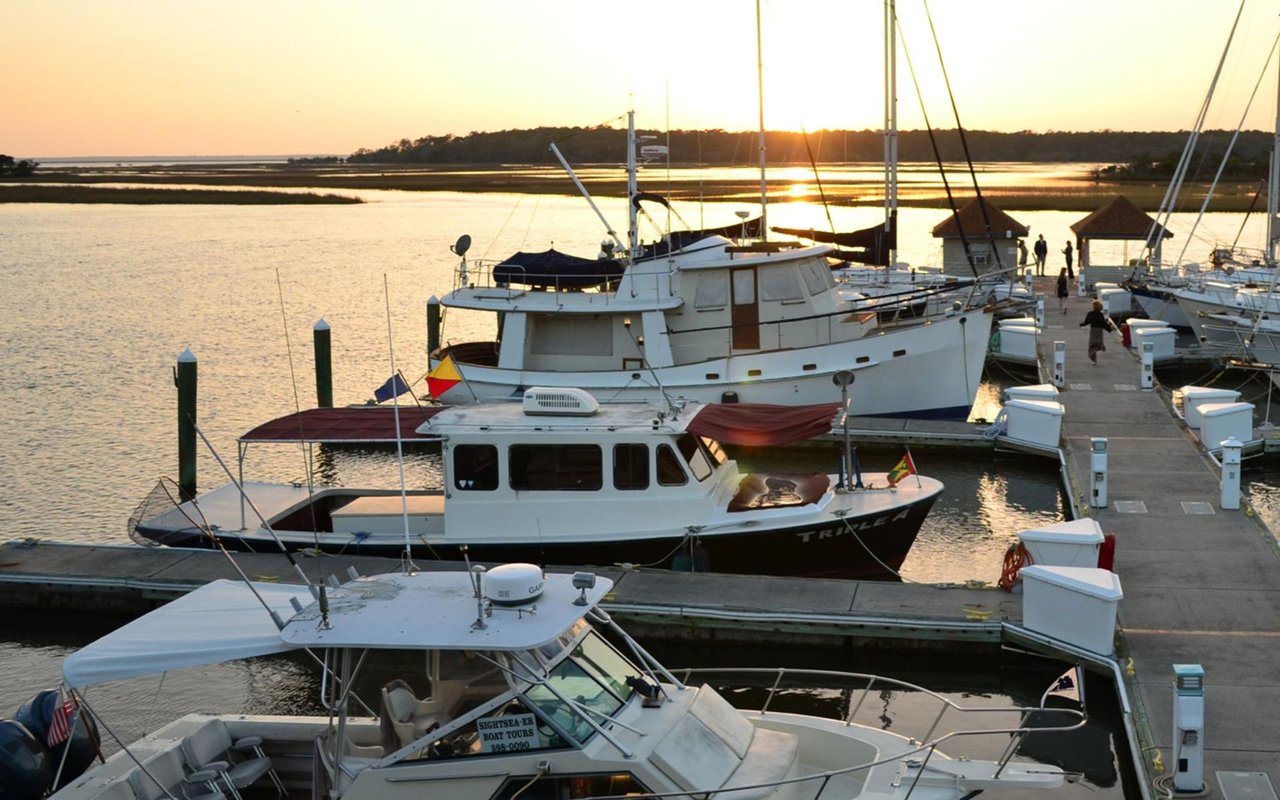
Some Wilmington Island neighborhoods solve this a different way. In communities like Creekside, water access runs through a shared community dock rather than a lot by lot private structure.
For a buyer who wants a boat slip, that structural difference is worth weighing against a private dock lot, even when the private lot's listing price looks similar. The tradeoff is usually less exclusivity and shared scheduling.
Before You Write an Offer
A few questions turn a vague "dock included" into something a buyer can actually evaluate:
- Ask for the Revocable License number and compare the licensed dimensions to what's physically built. Extensions, added finger piers, or boat lifts installed after the original license was issued may not be covered by it.
- If the property is a vacant waterfront lot rather than an existing home, don't assume dock rights come with the land. Get written confirmation from DNR's coastal permit coordinator that the specific parcel would qualify before treating future dock access as settled.
- If the dock predates any permitting record, ask whether the seller has ever had it reviewed. An undocumented dock isn't automatically a problem, but it is unresolved information that belongs in the due diligence period, not discovered after closing.
Frequently Asked Questions
Does a dock's Revocable License transfer automatically when a home sells? Ask DNR how the specific license will be handled before closing, especially if the structure doesn't match what's on file.
If DNR finalizes a new rule with different size limits, does that rewrite docks that already exist? For a specific dock, ask DNR staff how it would be treated if a final rule is adopted.
Can I buy marsh frontage on Wilmington Island and add a dock after closing? Ask DNR to review that particular site under whatever process is current at the time. The timeline and outcome aren't guaranteed before the land is yours.
A dock adds real value to a Wilmington Island property, and most of the ones on the market today are exactly what they appear to be. The point isn't caution for its own sake. It's knowing which question to ask before the inspection window closes, not after. If you're weighing a waterfront property on Turner Creek, Betz Creek, Bull River, or anywhere else on the island and want a second set of eyes on what's actually documented, The Landings Home Team is glad to start that conversation before you write the offer, not after.
This article is general information, not legal, tax or financial advice. Consult a qualified professional about your situation.