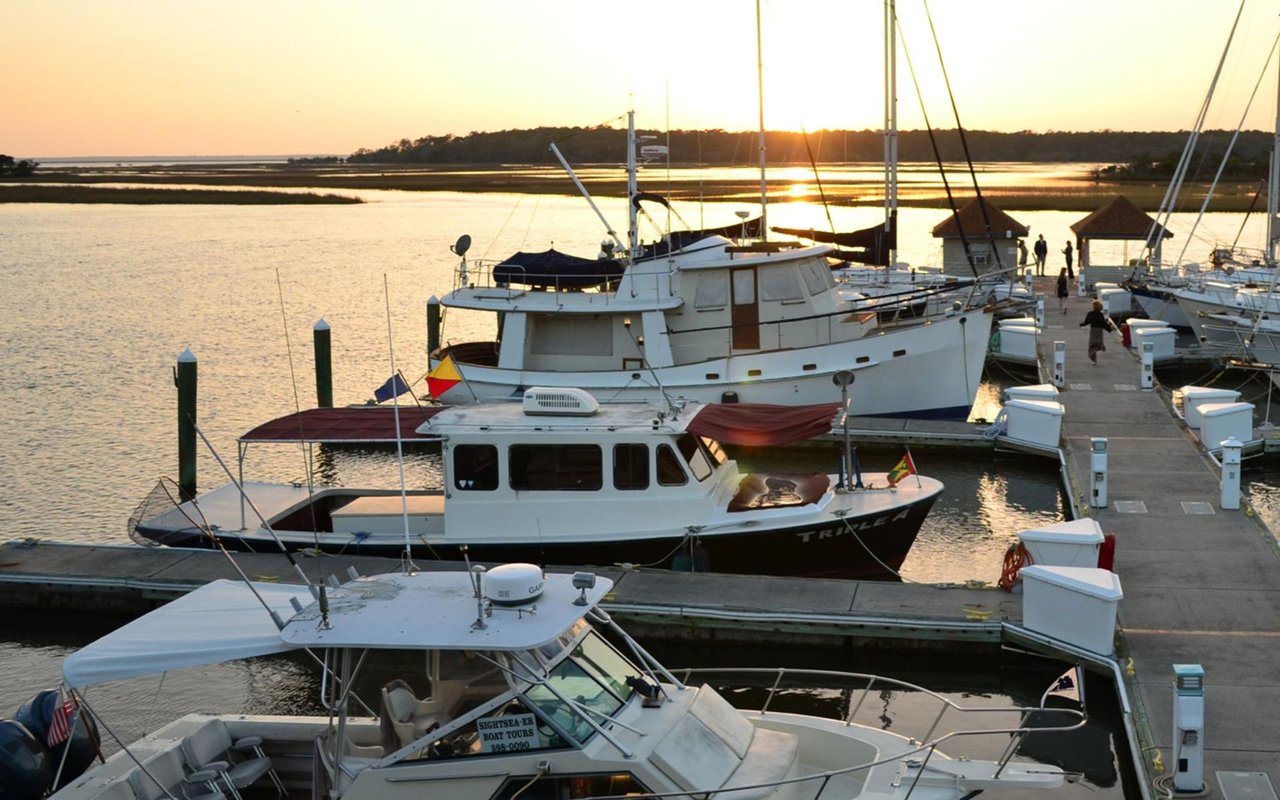
"We are golf centric," says Gary Lorfano, The Landings' director of marketing, describing what defines the private club that occupies most of Skidaway Island.
The courts tell a slightly different story these days.
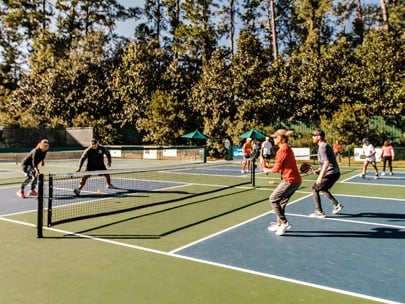
Pickleball at The Landings went from about 80 players in 2017 to more than 750 active players today. That is not a gradual climb. That is a sport going from a rounding error to a genuine fixture of daily life in under a decade, inside a club that has spent fifty years building its identity around six championship golf courses. The Club responded the way private clubs respond to real demand: it built more courts. Early in 2026 there were 15 dedicated pickleball courts on the property. By the time golf writer Len Ziehm toured the club in June 2026, the count had reached 22. Seven new courts inside roughly six months is a fast build for any amenity, let alone one that started as an afterthought next to the tennis complex.
Do the arithmetic and the mismatch is obvious. Participation grew close to ninefold since 2017. Court capacity, even after the recent push, grew by less than half again its starting count this year alone. A sport can outrun the infrastructure built for it, and at The Landings, that is exactly what happened. The interesting part isn't that the club added courts. It's what the club's own language and spending pattern say about which sport still gets first call on capital, and what that means for anyone trying to reserve a court at 8 a.m. this fall.
The Numbers Behind "Golf Centric"
Membership dollars explain the phrase better than any brochure could. Per Ziehm's June 2026 reporting, 2026 initiation fees at The Landings Golf and Athletic Club break down like this:
- Full golf membership: $80,000
- Associate golf membership: starting at $50,000
- National golf membership: $35,000
- Athletic membership (no golf): $40,000
A full golf membership costs twice what an athletic membership costs to join, before annual dues and food and beverage minimums are even factored in. Golf carries roughly 1,725 memberships out of about 7,500 total members, a little under a quarter of the membership base. Yet golf's initiation pricing sits at the top of the entire fee structure. That imbalance, a smaller share of members paying a disproportionately larger entry fee, is a decent proxy for where a club's committee attention naturally lands when it plans capital projects.
That attention shows up on the ground. Terrapin Point, the Willard Byrd course that runs to the northern tip of the island, is next in the renovation queue, and as of mid-2026 Davis Love III's name is attached to the redesign. A course renovation of that scale, with a marquee architect brought in to rework Byrd's original layout, is a multi-year commitment of both money and course closures. It is happening at the same time the club is finishing its pickleball court expansion, which tells you something useful: golf infrastructure gets planned years in advance with a named architect and a budget line. Pickleball court additions, at least so far, have looked more reactive, arriving after participation numbers made the case rather than ahead of them.
Why Pickleball Had to Earn Its Courts the Hard Way
Golf at The Landings didn't have to prove itself with a participation chart. It arrived with pedigree. Two of the six courses, Marshwood and Magnolia, carry Arnold Palmer's name. Tom Fazio designed Deer Creek, the course that hosts the Korn Ferry Tour's Club Car Championship every spring, a tournament Ziehm's reporting pegs at roughly a million dollars in purse and production value. Franklin Creek's clay courts host the ATP's Savannah Challenger. Both events put the club's golf and tennis programs in front of a national sports audience every year, which is the kind of reputational return that makes a renovation budget easier to approve at a board meeting.
Pickleball has no equivalent showcase event at The Landings, at least not yet. What it has instead is raw, sustained participation growth that eventually became too large to schedule around. That is a different path to the same outcome: expanded courts, more programming, real investment. It just took longer to get there, and it took a headcount increase of roughly 9x rather than a tournament contract to make the case.
There's a parallel worth noting in how residents already adapt their own habits around scarcity. Golfers who want to beat the heat and the crowd at Terrapin Point show up before sunrise, putting green traffic starting well before the first tee time. Pickleball players are increasingly doing the same thing at Oakridge and Franklin Creek, arriving early to claim a court before the after-breakfast rush. When a resident amenity becomes genuinely competitive, the workaround is rarely a formal fix. It's an earlier alarm clock.
What This Means for Your Next Game
Twenty-two courts sounds like a lot until you remember the growth curve that produced the demand for them. If participation keeps climbing anywhere near its historical pace, even a completed 22-court buildout will likely feel tight at peak hours within a year or two, the same way 15 courts felt tight by the time this year's expansion was finished. The honest expectation for anyone playing regularly at The Landings this fall is that morning and early-evening slots will stay competitive, expansion or not, because the participation curve has consistently outpaced the construction curve since 2017.
None of this means the club is neglecting racquet sports. Twenty-two courts in roughly a decade, built inside a club that also carries six golf courses, 31 tennis courts, eight bocce courts, and a 52,000-square-foot wellness center, is real investment by any measure. It means the sequencing tells you something. Golf gets renovated on a schedule with an architect's name attached before the first shovel goes in the ground. Racquet sports, pickleball especially, get expanded after the numbers force the conversation. Both paths get courts built. Only one of them gets ahead of demand.
That gap between the club's self-description and its actual morning traffic pattern is worth sitting with. "Golf centric" is still an accurate description of where the club's biggest membership dollars and longest-planned renovations go. It is a less accurate description of where a growing share of the club's members are actually spending their mornings. Both things can be true on the same 4,350-home island at the same time, and residents booking a court this week are living the gap in real time.
If you already call The Landings home, you've probably felt this shift without needing the participation numbers to explain it, in the extra five minutes it now takes to find an open court, in the new faces showing up at the paddle rack who weren't playing two years ago. The numbers just confirm what the courts have been telling you all along.
If you're a Landings homeowner weighing a move within the community, or you know someone who's been quietly wondering what it's really like on the ground here beyond the brochure, The Landings Home Team lives this island the same way you do. Let's start a conversation.