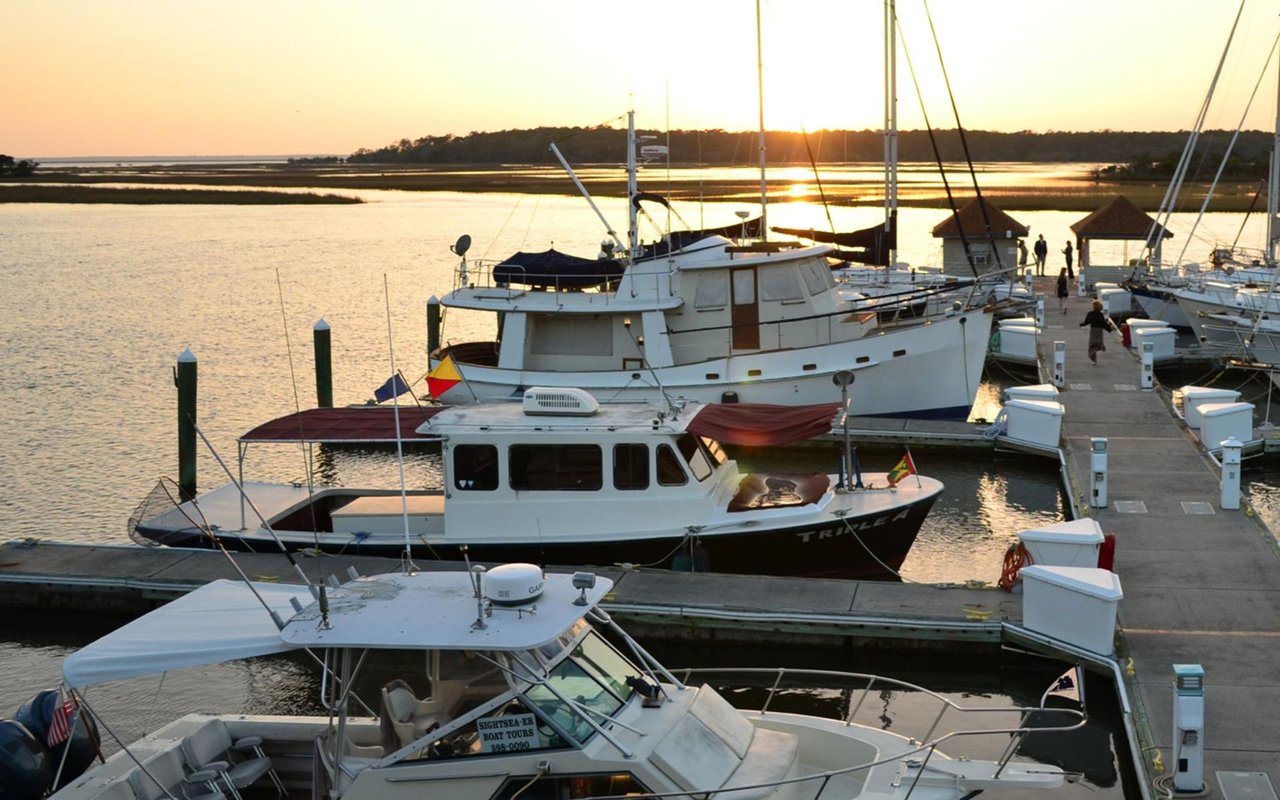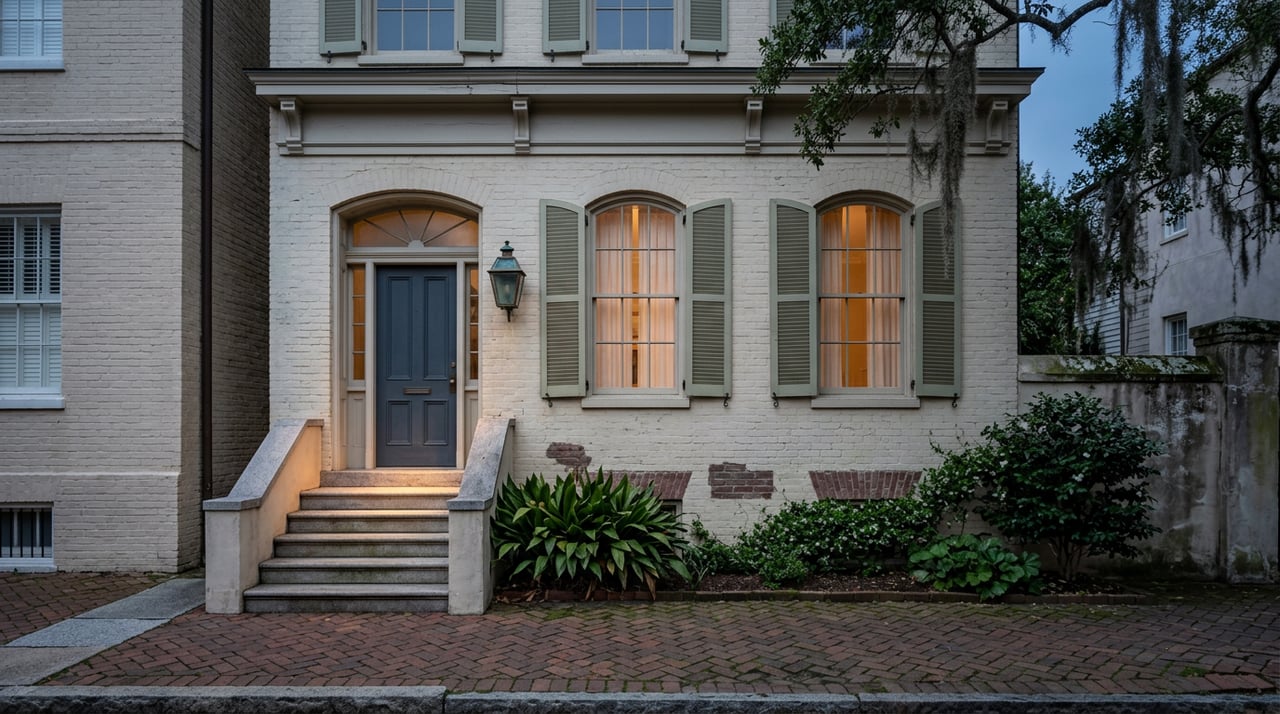
"That couple of dollars that don't come from the everyday local it comes from the visitors, that's the money we're using." That was District 2 Alderman Detric Leggett describing how Savannah will pay for the River Street plan the City Council approved on June 25, 2026, a 48-point blueprint covering the 12-acre waterfront district and funded through hotel-motel tax revenue rather than the property tax line on your bill.
The more interesting detail sat in the same vote, and almost nobody outside City Hall noticed it. The first construction dollars are not going to the plaza where the tour groups gather. They are going to the ramps, the facades, and the garbage. If you live here, that sequencing is the entire story, because the ramps are the part of River Street residents actually deal with.
The First Money Goes to the Entrances, Not the River
Alongside adopting the plan, council awarded Savannah's Waterfront Community Improvement District $1,350,000 to begin Phase 1. The Savannah Business Journal reported the specifics:
- New ironwork marking River Street's access points at 10 locations
- Accent uplighting on the district's signature facades
- Rebuilt refuse enclosures on each ramp
Read that list as a resident and it stops sounding like decoration. A visitor staying at a Bay Street hotel walks down once and strolls the plaza end to end. A Savannahian comes down a ramp, does one specific thing, and leaves by the same ramp, usually after dark, usually past the enclosure where every restaurant on the block stages its trash. The three items funded first are the three things a local encounters on the way in and the way out.
The district itself runs River Street from Martin Luther King, Jr. Boulevard to East Broad, and the study that produced the plan also took in Factors Walk, Rousakis Riverfront Plaza, and the north side and streetscape of Bay Street. Christian Sottile of Sottile + Sottile led the work, which began with field survey in early 2024. The SWCID board adopted the resulting Vision and Implementation Plan in spring 2025. Council's June 2026 vote is what moved it from a document to a budget line.
What the Last Two Rebuilds Actually Left Behind
River Street has been studied before, and the pattern of what survives is instructive.
The original transformation broke ground in 1975 and was dedicated in June 1977: a half-mile plaza built for roughly $7.3 million, about $4.3 million of it federal urban renewal money and $3 million local. That project is the reason there is anything down there at all besides warehouses.
Then came studies in 2009 and 2017. The 2009 study produced two things residents use now: the Plant Riverside District, and the grand stair at Montgomery Street that connects Franklin Square down to the water. One is a destination. The other is a way down. Half a century of waterfront planning in this city keeps delivering its most durable results in the form of vertical connections between the bluff and the river, which is exactly what the new plan's first phase is buying.
The longer-horizon items in the plan follow the same logic. Savannah Magazine has reported the opportunities under study: connecting and renovating Emmet and Morrell Parks, adding a waterfront playground, creating a gathering space for events and concerts, and turning Factors Walk into a gallery walk. SWCID executive director Julie Musselman framed the intent plainly.
"This waterfront belongs to everyone."
Morrell Park is the one on the water at the east end, next to the Marriott Riverfront, and it is already where a lot of people step off a boat without realizing it. Stitching it to Emmet Park would change how people arrive from the east side of downtown, which brings us to the other thing that shifted this summer.
The East End Quietly Became the Address That Matters
What happened at 5 East River Street
Olympia Cafe spent more than three decades in the ground floor of the Thomas Gamble Building, the 1877 structure the city bought in 1943 and is now renovating down to its systems. The upper five floors are being converted to city offices, meeting rooms, and administrative space, with the River Street level staying tenant space and existing tenants meant to keep operating through most of the schedule.
Olympia's lease expired at the end of 2025. Because the building is city-owned, the space had to go out to public solicitation, and in October 2025 council awarded the new lease to Olympia. Then the deal collapsed. Following the death of longtime co-owner Nick Pappas in 2025, the ownership group could not resolve its differences, and the restaurant told the city in May 2026 that it would not return. More than 6,000 people signed a petition asking it to stay.
The city reopened bidding. According to the city's own description of the process, proposals will be scored on concept, experience, design vision, financial capacity, operational approach, and hours of operation first, with the bid amount scored separately and the combined score going to council. Hours of operation carrying weight ahead of a dollar figure is the most resident-relevant sentence in that entire solicitation. Hours are what decide whether a River Street tenant is open at nine on a Tuesday in February or closed by mid-afternoon in the off season.
Where the Greek food went
It did not leave the river. On Friday, July 10, 2026, the family reopened as Limani at 417 East River Street, with a second floor, a balcony, a bar, and a larger kitchen. Head chef Blake Mabry has said the menu is essentially the one people already knew, with small adjustments.
Look at the address. Founder Vasilis Varlagas moved a 30-plus-year institution several blocks east, away from City Hall and toward Morrell Park, the Waving Girl Landing, and the stretch the vision plan wants to connect to Emmet Park. Whether by instinct or arithmetic, the restaurant relocated to the end of River Street that the next decade of public money is pointed at.
The Ferry Is Still the Most Underused Front Door in the County
Every one of those entrances has a competitor that most residents forget exists. The Savannah Belles Ferry runs free, every 10 minutes, from 7 a.m. to 10 p.m., seven days a week except Thanksgiving, Christmas, and New Year's Day, according to Chatham Area Transit. The boats are ADA compliant, they take bicycles and luggage, and they are pet friendly if your dog is leashed or in a carrier. The newest hybrid vessels run on battery power with onboard diesel generators.
The landings are City Hall Landing next to the Hyatt Regency, Waving Girl Landing next to the Marriott Riverfront at the east end, and Trade Center Landing on Hutchinson Island by the convention center and the Westin. The vessels carry the names of Juliette Gordon Low, Susie King Taylor, Florence Martus, and Mary Musgrove.
For a resident, the practical translation is this: park once on Hutchinson Island, cross for nothing, and arrive at the east end of River Street on foot. You skip the ramps entirely, which is a decent workaround while the ramps are the thing being worked on.
A Block Off the Water, a New Kind of Front Door
Downtown's other big arrival this fall is not on River Street at all. Recess Hotel & Club is bringing the 1912 Manger Building at 7 East Congress Street back to its original use, a 221-key property from Left Lane with interiors by Atelier Pond. WSAV has reported a September opening; the developer's own materials point to fall. Either way it lands within weeks.
What matters locally is the ground floor and the roof rather than the rooms. The property includes a French brasserie called Le Flâneur built around the building's original mosaic flooring, a takeout window called The Servery for juices, pastries, salads, and sandwiches, a lobby bar, and Kilter, a rooftop bar with what the developer describes as Savannah's tallest rooftop pool. Club Recess occupies 5,500 square feet on the second floor as a membership clubhouse with studios, libraries, and workspace, and a custom mural by Savannah painter Kipper Millsap runs through the art program. Left Lane's previous Savannah project was Hotel Bardo.
Set that against the counterweight. Mia Mance of the Savannah Downtown Business Association has pointed out that this wave of investment has arrived alongside closures of locally owned restaurants, Taco Affair among them, and a Ritz-Carlton is planned for Johnson Square. More rooms downtown means more competition for the same tables at seven on a Saturday. It also means more places open at ten on a Wednesday, which is when residents can actually get in.
Worth Putting on the Fridge
Oktoberfest at Plant Riverside District has run on Saturdays in October for the past several years, with The Rhinelanders on the Riverwalk Stage, stein holding, keg bowling, and the Strudel Stroll. The Wiener Dog Races and the All Breeds Dog Races, for dogs up to 30 pounds, are organized by Savannah's Waterfront, a 501(c)(3), with registration running $25 in 2025. The 2026 dates have not been posted by the organizers yet, and at least one national listing shows a late-September date rather than the usual October Saturdays, so check savannahswaterfront.com before you load the car.
The free River Street trick-or-treat with participating waterfront businesses is set for Saturday, October 24, 2026, from 2 to 5 p.m.
Read together, the ferry, the ramps, the east-end move, and the new brasserie a block up all say the same thing. River Street's next chapter is being written at its edges and its entrances, and residents are the people who use those.
If you are weighing what all of this means for a specific street, a specific view, or a specific address, that is the conversation we have every week. The Landings Home Team lives in the communities we sell in, from Skidaway Island to the historic district, and we are always glad to talk through what is changing and what it means for your home. Let's Start a Conversation.