"We can kind of control our own destiny out there."
That line comes from a Vernonburg resident named Andy Chisholm, recorded in a Georgia Department of Transportation cultural resources booklet about the town. It reads like the kind of thing anyone might say about a quiet neighborhood. In Vernonburg, it happens to be a legal fact.
Vernonburg is not a subdivision. It is not a homeowners association with a clubhouse and a set of covenants. It is an incorporated town, roughly ten miles south of downtown Savannah, with its own elected government, its own environmental monitoring, and a documented history of pushing back on much larger institutions and winning. Most people driving through White Bluff assume they are passing through another Savannah neighborhood. They are actually crossing into a separate municipality that has been governing itself since 1866, and that habit of self-governance is not decorative. It shaped a federal water pollution case, a national book, and the route of a major road.
A Town Smaller Than Most Subdivisions, Governing Itself Since 1866
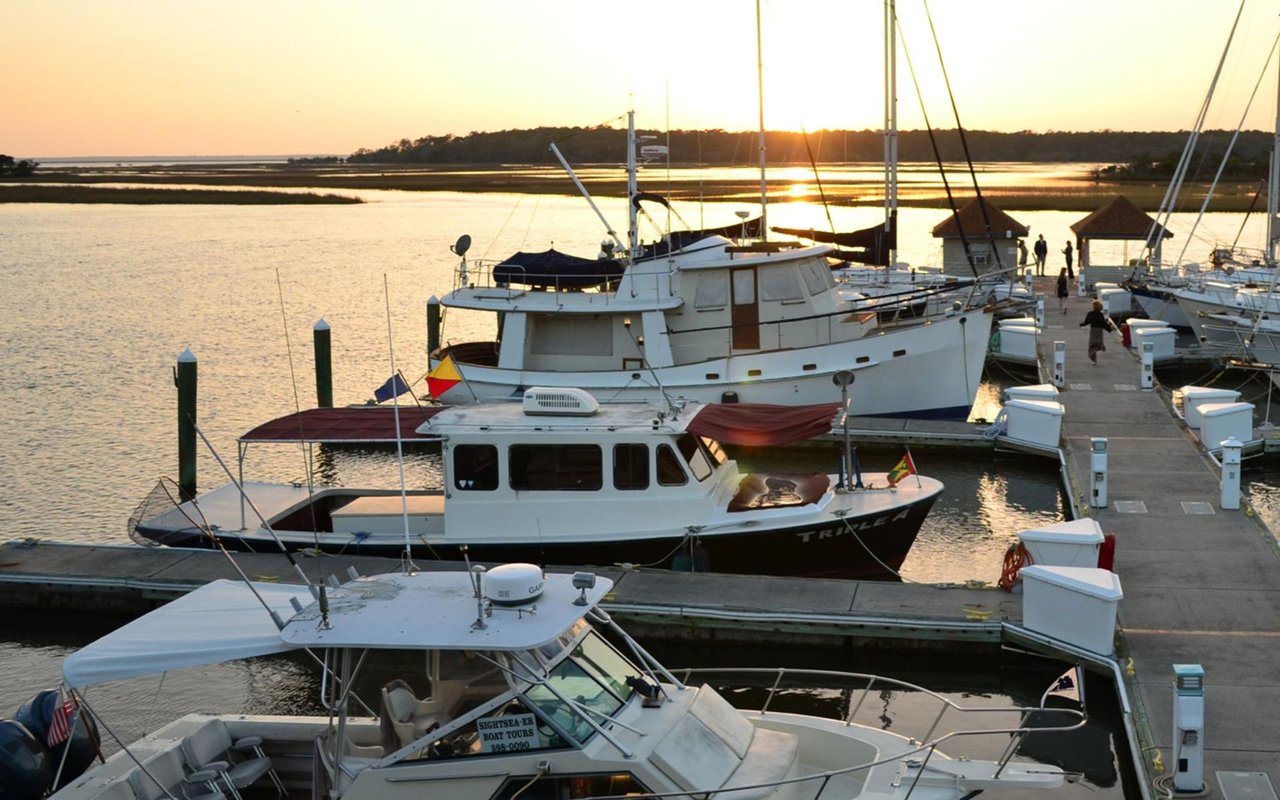
Vernonburg covers about 0.4 square miles on a bluff above the Vernon River. As of the 2020 census, 139 people lived there, and as of the 2010 census the town counted 69 housing units across that same small footprint, according to Wikipedia's Census Bureau figures. The town's own site puts the current population at roughly 150. Either number is smaller than a single phase of many planned communities in the region.
What makes Vernonburg different is not its size. It is that this tiny footprint is a real municipality, incorporated by the Georgia General Assembly in 1866 and governed today by a Town Council made up of an Intendant and four Commissioners, all elected to two-year terms. Meetings happen every other month, on the second Thursday at 6 p.m., at White Bluff Presbyterian Church, and they are open to the public. There is no county administrator making zoning calls on Vernonburg's behalf and no developer's HOA board setting the rules. The town sets its own policy and has been doing so for 160 years.
The name itself points to how old this arrangement is. A group of about 40 indentured servants, mostly Palatine and Salzburger immigrants, landed off Tybee Island on December 4, 1737, and by September 1742 that group was making its case for land at a place then known as White Bluff on the Vernon River, according to the Georgia DOT's own historical account. They named their settlement "Vernonburgh" after James Vernon, a trustee credited with helping bring the Salzburgers to Georgia. That founding group negotiated directly with colonial land officials for their grants. Nearly three centuries later, the town is still negotiating its own terms, just with different institutions.
The Fight That Turned a River Town Into a National Case Study
By the mid-20th century, Vernonburg's defining trait was not its size. It was what the town was willing to do to protect the river it sits on.
In the early 1970s, pollution in the waters of the Vernon River put tiny Vernonburg in direct conflict with the City of Savannah, a city many times its size. The fight was led by then-Intendant Nick Williams, and it resulted in the construction of a major water treatment facility. The dispute drew enough national attention that it became the subject of "The Water Lords: Ralph Nader's Study Group Report on Industry and Environmental Crisis in Savannah, Georgia," a 1971 book written by James M. Fallows for Grossman Publishers. University library catalogs at Stanford, the University of Wisconsin, and elsewhere confirm the book's full scope: an examination of pulp and paper industry pollution across the Savannah River Valley, with chapters on specific mill towns and the legal fight to bring down the pollution and bring back the water.
A town of a few dozen households does not usually end up as a case study in a Ralph Nader report. Vernonburg did, because its residents treated the health of their river as something worth a legal fight against their much larger neighbor, and they had enough organized standing as an incorporated town to make that fight stick.
That same GDOT record notes that Vernonburg still hires its own consultants to test the waters of the Vernon River on a regular basis. The lawsuit ended decades ago. The habit it created did not.
The Road You Drive Bent Around This Town's Marsh
The same instinct showed up again when a road project threatened to reshape the White Bluff area. The Georgia DOT's account describes citizens of Vernonburg working to keep a development plan from moving forward through the Metropolitan Planning Commission, specifically to protect the character of their community and its marsh frontage. That is the same fight Andy Chisholm was talking about when he said the town could control its own destiny.
The visible result of that era is still there today. A stretch of the Harry S. Truman Parkway, the road that funnels Southside traffic toward downtown Savannah, was routed on elevated pilings rather than filled directly through the tidal saltmarsh bordering Vernonburg, preserving the wetland boundary that has always framed the town. Drivers on that stretch of parkway are passing over marsh that a town of roughly 150 people fought to keep intact.
Small Enough to Notice Everything That Happens to It
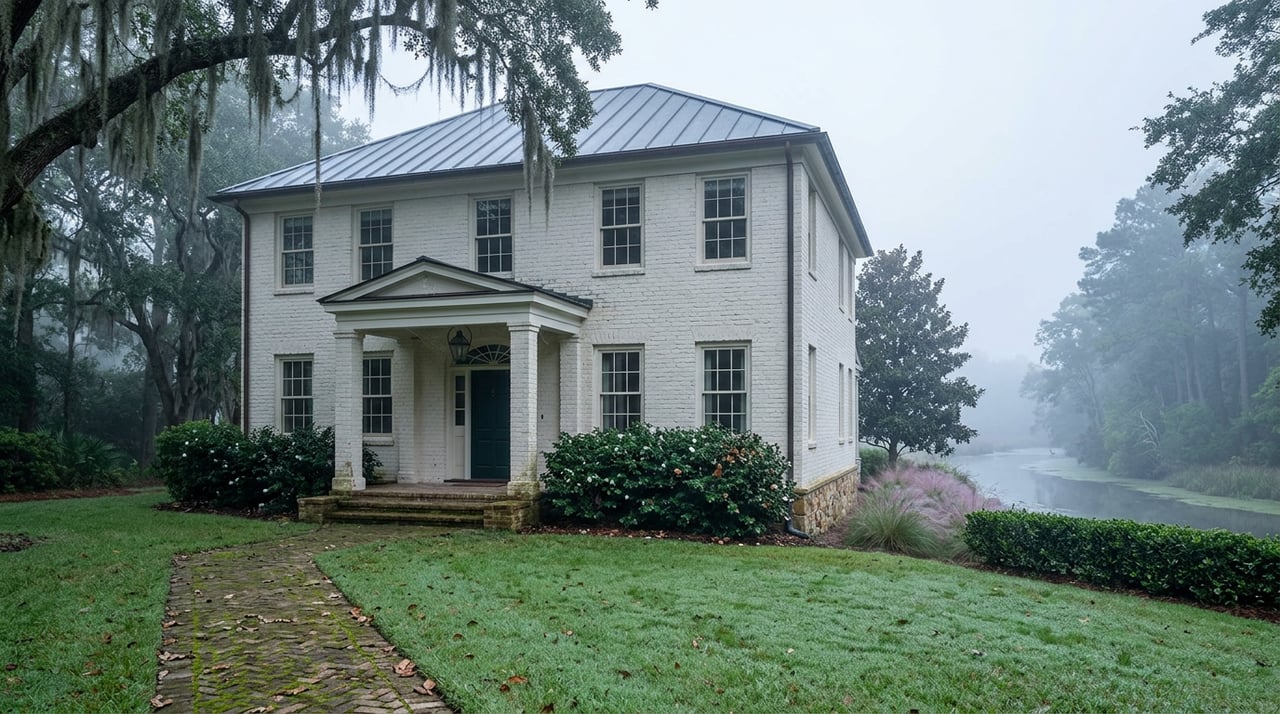
Vernonburg's historic character is now formally protected. The town is listed on the National Register of Historic Places, with a historic district that includes homes dating from the 1840s through the mid-20th century, set among mature oaks and long-established gardens. A historical marker on Dancy Avenue, a short walk from Rockwell Avenue, notes the town's founding in 1742 and its 1990 National Register listing.
The Historic Savannah Foundation's own account of the district adds a detail that says something about how much of the original town survives underground as well as above it. Archaeological surveys conducted in the early 1990s found 18th and 19th century artifacts, including oyster shells tied to the colonial-era town sites, in 77% of the test pits dug. The original town lots, laid out along what is now Rockwell Avenue, were largely abandoned by the early 1800s in favor of larger house sites set back from the street and closer to the bluff. That shift is part of why so much of the colonial footprint stayed undisturbed long enough to be documented.
None of this is static history behind glass. It is the reason a few specific things are still true for anyone living in Vernonburg today:
- The town tests its own river water rather than relying solely on county or city monitoring.
- Town Council meetings are small enough to attend in person, at a specific church, on a fixed schedule, with real decision-making power over local policy.
- A federally recognized historic district status protects the architectural character of the streets residents walk every day, not as a marketing label but as a documented designation tied to real archaeological and architectural review.
What the Town's Track Record Actually Tells You
Vernonburg's reputation as a quiet, tucked-away river community is accurate as far as it goes. What gets lost is that the quiet is not passive. It is the product of a town that has repeatedly organized itself to defend a river, a marsh, and a historic footprint against much larger opponents, and won often enough that a national author, a state transportation agency, and a federal preservation registry have all had reason to write it down.
That is a different kind of small town than "quaint." It is a town that has, on at least two documented occasions, gotten its way against the City of Savannah and a road project that could have reshaped its edges. Anyone walking along Rockwell Avenue or driving the elevated stretch of the Truman Parkway is moving through the result of that history, whether they know the name Nick Williams or not.
If you already call Vernonburg home, you are living inside the outcome of that fight every time you turn on the tap or watch the marsh grass from the parkway. If you are curious how a town this size keeps making decisions that stick, the answer is on the record, in a Nader-era book, a state historical booklet, and the town's own minutes.
Questions about Vernonburg, its history, or how its neighbors along the Vernon River and the greater Skidaway Island area live day to day are exactly the kind of local detail The Landings Home Team spends its time tracking. Let's Start a Conversation.